
Research & Science

Scholar of the Month
Scholar of the Month Brian Peters Assistant Professor College of Architecture and Environmental Design 2013-present Brian Peters is an assistant professor in the College of Architecture and Environmental Design. His research and teaching focuses on digital technologies in architectural…
Kent Campus

Scholar of the Month
Scholar of the Month Ye Zhao Associate Professor of Computer Science College of Arts and Sciences 2006-present Ye Zhao is associate professor of computer science in the College of Arts and Sciences. His research focuses on physically based simulation and visualization, natural phenomena model…
Kent Campus
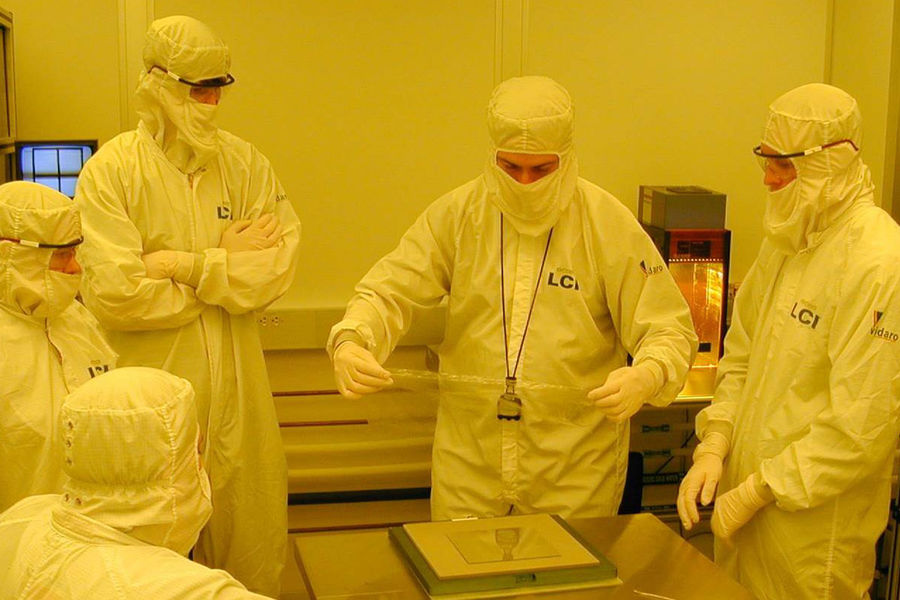
Kent State’s Liquid Crystal Institute to Celebrate “50 Years of Innovation�
The Glenn H. Brown Liquid Crystal Institute® and the College of Arts and Sciences at ºÚÁÏÍø hosted a 50th anniversary celebration of the institute on Friday, Sept. 25, in the Kent Student Center Kiva on the Kent Campus. The event kicked off a yearlong celebration that will culminate w…
Kent Campus
WKYC TV Gets a Bird’s-Eye View of Drone Technology at Kent State
What started as a hobby a decade ago has turned into a promising future for ºÚÁÏÍø senior Alex Flock. WKYC TV featured Flock for a story on the growing interest in drones and Kent State’s minor in unmanned aircraft systems. Along with Blake Stringer, Ph.D., assistant professor in Ken…
Kent Campus

Scholar of the Month
Scholar of the Month Thomas Long Assistant Professor College of Applied Engineering, Sustainability and Technology 2014-present Thomas D. Long is assistant professor and lead faculty member in Aeronautics-Aviation Management at the College of Applied Engineering, Sustainability and Technology…
Kent Campus

Scholar of the Month
Scholar of the Month David Hacker Associate Professor of Geology College of Arts and Sciences ºÚÁÏÍø at Trumbull 2000-present David Hacker is associate professor of geology in the College of Arts and Sciences at ºÚÁÏÍø at Trumbull. His research in structural geo…
Kent Campus

Scholar of the Month
Scholar of the Month Andrew Shahriari Associate Professor of Music College of the Arts 2008-present Andrew Shahriari has been recently promoted to associate professor for the 2015-2016 academic year. He also serves as coordinator of online classes for music in the Hugh A. Glauser School of Mu…
Kent Campus
Paul DiCorleto Named New Vice President for Research and Sponsored Programs at Kent State
 Following a national search, ºÚÁÏÍø has selected Paul E. DiCorleto, Ph.D., as its new vice president for research and sponsored programs. DiCorleto comes to Kent State from Cleveland Clinic, where he has served as Sherwin-Page Chair of the Lerner Research Institute since 2002, and from Case Western Reserve University, where he has served as chair of the Department of Molecular Medicine in the Case Western Reserve University School of Medicine since 2003. He joins Kent State on Aug. 17.
Kent Campus
Kent State Professors Use Satellite Imagery to Better Understand the Landscape of the Cambodian Genocide
ºÚÁÏÍø recently received a $330,000 grant from the National Science Foundation to use historical satellite imagery and archival research to study landscapes of mass violence in Cambodia during and after the regime of the Khmer Rouge from 1975 to 1979. The collaborative project, led b…
Kent Campus

Scholar of the Month
Scholar of the Month Denice Sheehan Associate Professor of Nursing College of Nursing 2007-present Denice Sheehan is an associate professor in the College of Nursing. Her program of research focuses on adolescents with a parent in hospice. She is especially interested in how adolescents inter…
Kent Campus