
AMLCI Materials Day 2026 "Polymers & Elastomers�
Friday - April 10, 2026
Kick off Materials Day 2026 with refreshments and TED-style talks from current (AM)LCI Student Fellowship Award winners, followed by remarks from our 2026 (AM)LCI Distinguished Alumni Award recipient, Dr. Xiao-Yang Huang.
| Friday, April 10, 2026 | AMLCI, Samsung Auditorium (Liquid Crystal Materials Science Building) |
| Time | Activity |
| 4:00 - 4:20 pm | Refreshments |
| 4:20 - 4:25 pm | Opening Remarks by Torsten HEGMANN (Director, AMLCI) |
AMLCI Fellowships & Alumni Award Ceremony
Glenn H. Brown Fellowship: For outstanding graduate students who are engaged in research on biological or biology related topics of liquid crystals.
Alfred Saupe Fellowship: For outstanding graduate students working on physics or material sciences of liquid crystals
James Fergason Fellowship: For outstanding graduate students working on applied research using liquid crystals.
| Friday, April 10, 2026 | AMLCI, Samsung Auditorium (Liquid Crystal Materials Science Building) |
| Time | Speaker "Title" Session Chair: Torsten HEGMANN |
| 4:30 - 4:40 pm | Mahesha J. Kodithuwakku ARACHCHIGE - Winner - Glenn H. Brown Fellowship; Presented with a special note from the children of Glenn Brown: Larry, Nancy, Don, Barb. TED Talk: “Bacteria interactions with ferroelectric nematic liquid crystals� |
| 4:45 - 4:55 pm | Gourab ACHARJEE - Winner - Alfred Saupe Fellowship; Presented by Antal Jákli TED Talk: “The importance of shape commensurability in chirality transfer� |
| 5:00 - 5:10 pm | Tim OGOLLA - Winner - James Fergason Fellowship; Presented by T. Hegmann TED Talk: “Augmenting dynamic scattering with a mixture of positive- and negative- dielectric anisotropy liquid crystals� |
| 5:15 - 5:25 pm | Xiao-Yang HUANG - (President, Ebulent Technologies Corp.) - Distinguished Alum Award; Presented by Charles Wang TED Talk: “Reflection on my time at the LCI and KSU� |
| 5:30 pm | Closing Day 1 |
Saturday - April 11, 2026 - Morning Session: 8:30 am - 12:30 pm
Enjoy coffee and refreshments while hearing presentations from our featured speaker, Dr. Danqing Liu, and talks by Dr. Antal Jákli, Dr. Ali Dhinojwala, Dr. Svetlana Morozova, Dr. Elda Hegmann, and Dr. Oleg Lavrentovich.
| Saturday, April 11, 2026 | AMLCI, Samsung Auditorium (Liquid Crystal Materials Science Building) |
| Time | Speaker (Affiliation) "Title" Session Chair: Yeganeh NIK AKHTAR |
| 8:30 - 9:00 am | Coffee & Refreshments |
| 9:00 - 9:40 am | Danqing LIU Department of Chemical Engineering & Chemistry, Eindhoven University of Technology) Feature Talk: “Interactive liquid crystal polymers for haptics and soft robotics� (Virtual Via MS TEAMS) |
| 9:40 – 10:10 am | Antal I. J�KLI (KSU, Department of Physics, Materials Science Graduate Program, AMLCI) “Controlling shapes of liquid crystal elastomers by small molecular weight liquid crystal droplets� |
| 10:10 - 10:40 am | Ali DHINOJWALA (University of Akron, School of Polymer Science & Polymer Engineering) “Interfacial contact between rough surfaces in dry and wet environments� |
| 10:40 - 11:00 am | Coffee Break |
| Session Chair: Gourab ACHARJEE | |
| 11:00 - 11:30 am | Svetlana MOROZOVA (CWRU, Department of Macromolecular Science & Engineering) “Collagen type II dynamics and assembly in anisotropic porous polyacrylamide hydrogels templated by liquid crystals� |
| 11:30 – 12-noon | Elda HEGMANN (KSU, Department of Biological Sciences, Materials Science Graduate Program, AMLCI) “3-D Printing of liquid crystal elastomer-based inks and their biological applications� |
| 12:00-noon – 12:30 pm | Oleg LAVRENTOVICH (KSU, Department of Physics, Materials Science Graduate Program, AMLCI) “Polarization patterns in ferroelectric nematics � |
Saturday - April 11, 2026 - Afternoon Session: LUNCH BREAK 12:30 pm - 1:30 pm
The afternoon session will start with a lunch buffet, followed by our keynote lecture by Dr. Christopher N. Bowman. Additional presentations include Dr. João Maia, updates on Northeast Ohio’s polymer industry from Dr. Has Dorfi, Dr. Marshall Moore, and Dr. Chad Jasinas, a talk by Dr. James Eagan, and the Young Investigator Session.
| Location | |
|---|---|
| Participants | AMLCI - LCM Building (2nd Floor Lobby) |
| AMLCI Advisory Boards | Working Lunch - AMLCI Seminar Room (Rm. 229 & via MS Teams) |
Saturday - April 11, 2026 - Afternoon Session Continues: 1:30 pm – 6:00 pm – Samsung Auditorium (LCM Building)
| Saturday, April 11, 2026 | AMLCI, Samsung Auditorium (Liquid Crystal Materials Science Building)) |
| Time | Speaker (Affiliation) "Title" Session Chair: Shamima AKHTER |
| 1:30 – 2:10 pm | Chris BOWMAN (University of Colorado at Boulder, Chemical & Biological Engineering, Materials Science & Engineering Program) Keynote Lecture “Novel applications and developments utilizing photopolymerizations� |
| 2:10 - 2:40 pm | João MAIA (CWRU, Department of Macromolecular Science & Engineering) “Continuous catalyst cracking in twin-screw extrusion: A new approach to upcycling at scale of polyolefins� |
| 2:40 – 3:10 pm | Hans DORFI (Executive Director & Chief Innovation Officer), Marshall MOORE (Industry Consultant, Polymer Pilot & Scale-Up Task Team), and Chad JASIUNAS (Director, Pilot Plant); all: The Polymer Industry Cluster; Greater Akron Chamber “Updates on recent activities regarding Northeast Ohio’s polymer industry� |
| 3:10 - 3:40 pm | James EAGAN (University of Akron, School of Polymer Science & Polymer Engineering) “Carbon dioxide utilization as versatile platform for functional materials� |
| 3:40 – 4:00 pm | Coffee Break |
| Young Investigator Session Session Chair: Ashley GILMOR | |
| 4:00 – 4:15 pm | Abraham VALERIO-AGUILAR (KSU, Materials Science Graduate Program, AMLCI) “Hyper-branched polymers as scaffolds for spinal cord drug delivery applications� |
| 4:15 – 4:30 pm | Md Kamrul HASAN (KSU, Chemistry and Biochemistry, AMLCI) “Geometric control of emitters for high-dissymmetry circularly polarized luminescence� |
| 4:30 – 4:45 pm | Lincoln PAIK (KSU, Physics, AMLCI) “Impact of flexoelectricity and electrostatics in polar nematic liquid crystals� |
| 4:45 – 5:00 pm | Manisha TALWAR (KSU, Physics, AMLCI) “Bifocal microlenses from ferroelectric nematic liquid crystal droplets� |
| 5:00 – 5:15 pm | Vanessa JIRÓN (KSU, Materials Science Graduate Program, AMLCI) “Cancer cell death directed by orientational stresses in liquid crystal polymer networks� |
| 5:15 – 5:30 pm | Shamima AKHTER (KSU, Chemistry and Biochemistry, AMLCI) “From molecular shape to circular light: bent-core liquid crystals and clustomesogens for red–NIR CPL devices� |
| 5:30 – 5:45 pm | Zak SIDDIQUEE (KSU, Physics, AMLCI) “Harnessing anisotropy in liquid crystal elastomer based lithium-ion gel-polymer batteries� |
| 5:45 – 6:00 pm | Ashish Chandra DAS (KSU, Materials Science Graduate Program, AMLCI) “Rheological properties and shear-induced structures of ferroelectric nematic liquid crystals� |
| 6:00 pm | End of Sessions / Closing Day 2 |
When & Where
Materials Day 2026 will take place on April 10th and 11th 2026, in Samsung Auditorium in the Liquid Crystal Materials Science Building (LCM-101) on ºÚÁÏÍø's Kent Campus. The street address is 1425 Lefton Esplanade, Kent, Ohio.
Parking locations near the building are noted below with red markers. The Samsung Auditorium is in the north wing of the building on the first floor, indicated by a yellow arrow.

Theme
The theme of AMLCI Materials Day 2026 (MD26) “Polymers & Elastomers� recognizes the unique role these materials play in our daily lives. Bestowed with additional liquid crystalline properties, these materials are studied and used as multi-responsive materials in actuators, soft robotics, cell scaffolds, and energy generation. MD26 will explore the fundamental science behind and future groundbreaking applications toward programmable smart materials that occur at the interface between polymers/elastomers and liquid crystals.
Keynote Speaker
Saturday, April 11th - Samsung Auditorium (LCM Building)
Christopher N. Bowman
University of Colorado
Department of Chemical and Biological Engineering
Department of Restorative Dentistry
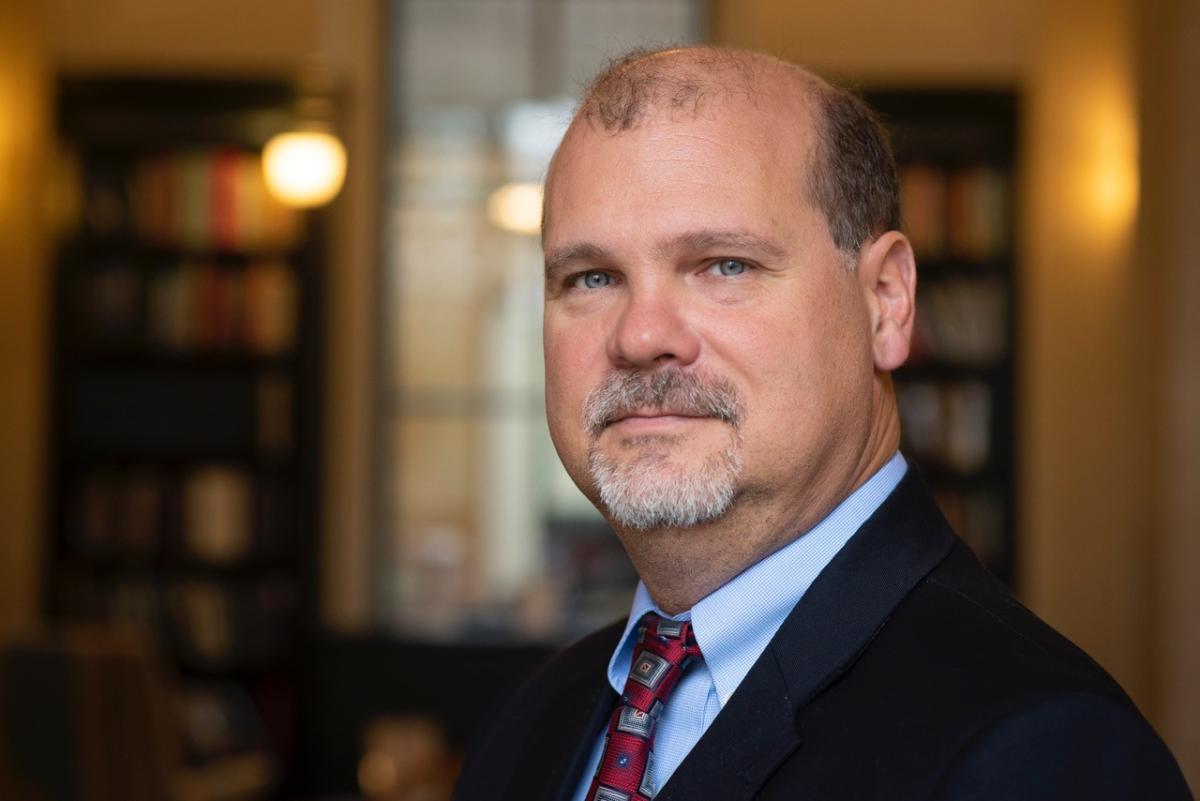
Professor Christopher N. Bowman received his B.S. and Ph.D. in Chemical Engineering from Purdue University in 1988 and 1991, respectively. After receiving his Ph.D., he began his academic career at the University of Colorado in January of 1992 as an Assistant Professor. Since that time Professor Bowman has built a program focused on the fundamentals and applications of crosslinked polymers formed via photopolymerization reactions. He works in the broad areas of the fundamentals of polymerization reaction engineering, polymer chemistry, crosslinked polymers, photopolymerizations and biomaterials. Professor Bowman has remained at Colorado throughout his academic career and is currently the Patten Endowed Chair of the Department of Chemical and Biological Engineering as well as a Clinical Professor of Restorative Dentistry at the University of Colorado at Denver.
“Novel Applications and Developments Utilizing Photopolymerizations�
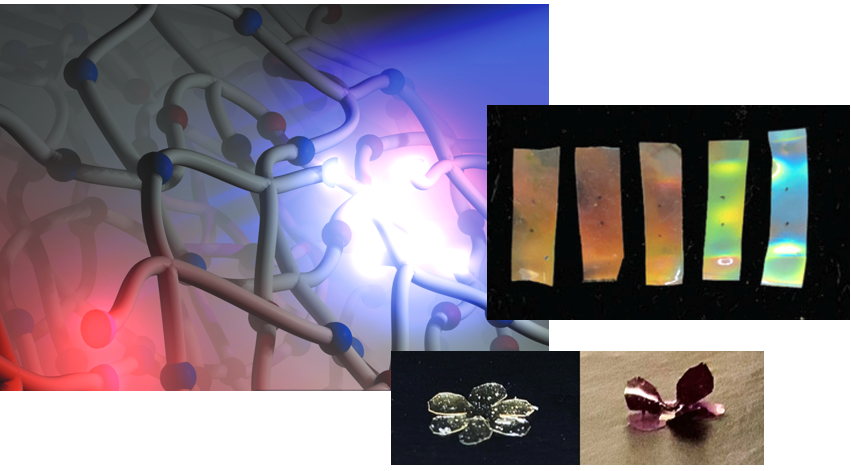
Photopolymerization reactions have been explored and utilized since the time of the ancient Egyptians; however, development of new photopolymerization methodologies and applications continues at an ever more rapid pace. Traditionally, photopolymerization of multifunctional monomers results in highly crosslinked materials suitable for applications as optical lenses, optical fiber coatings, and dental materials. These reactions are ubiquitous not only because of the nature of the final polymer product, but also for the characteristics of the reaction itself. Photopolymerizations are far more energy efficient than their thermal counterparts, are typically performed in a solventless manner that is more environmentally compatible, the reactions occur rapidly at ambient conditions, and the polymerization can be controlled in both time and space.
Here, we will focus on two distinct vignettes related to our photopolymerizations work including the development of novel click-reaction based photopolymerization reactions and materials and development of polymer networks with dynamic covalent links that exhibit unique responses to exposure to light that alleviate stress and lead to shape and compositional changes. First, we will discuss the potential and application of photopolymerization reactions based on click reactions. These unique polymerizations enable fabrication of low stress, highly functional, homogeneous materials with the facile ability to induce a multistage polymerization reaction suitable for the formation of holographic and other optical materials. We will next present work on covalent adaptable networks (CANs) that incorporate dynamic covalent bonds as crosslinks within the network that respond to light to (de)activate the dynamic bond character. These materials are able to change shape and stress-state when exposed to light, facilitating application as novel optical and actuating materials.
Featured Speaker
Saturday, April 11th - Samsung Auditorium (LCM Building)
Danqing Liu
Human Interactive Materials
Department of Engineering and Chemistry
Eindhoven University of Technology
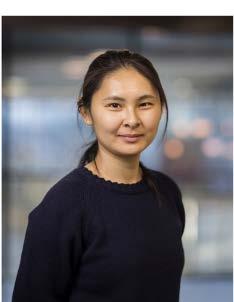
Danqing Liu received her Master degree in Electrical Engineering in 2009 at the Delft University in The Netherlands. She joined the Department of Mechanical Engineering at Eindhoven University of Technology, The Netherlands for her PhD research. She developed polymer responsive surfaces based on hydrogels and liquid crystal polymers. She received her PhD degree in 2013. In the same year, she joined the Department of Chemical Engineering and Chemistry at the same university working as a postdoctoral student on new mechanisms of surface activation. In 2015 she was a Research Fellow at the Institute of Complex Molecular Systems in Eindhoven, in 2019 she was appointed as Assistant professor (Tenured) at the Department of Chemical Engineering and Chemistry, Eindhoven University of Technology, The Netherlands. From 2023 she is appointed as Associate professor. In 2020 she was awarded Michi Nakata Prize for Early Career Achievements by the International Liquid Crystal Society. With broad background, Danqing Liu is a materials scientist. In her work, she attempts to fill the field between molecular sciences, such as synthetic organic chemistry, and the dimensions of the more macroscopic materials including morphology and shape control. Special in the approach is the transfer or even amplification of the responsive (dielectric-, ferroelectric-, piezoelectric-, and/or photochemical) effects of a single molecule to the macroscopic level of a device. This is realized by incorporating the functional molecules into suitable and cooperative host materials, such as liquid crystals.
“Interactive liquid crystal polymers for haptics and soft robotics�
We propose the integration of a haptic liquid crystal polymer network (LCN) coating into optical displays, creating a next-generation touchscreen with dynamic haptic feedback (1). This innovative approach bridges optics and haptics, enabling displays to provide real-time tactile sensations through programmable surface deformations. The LCN coating responds to external stimuli such as temperature, light, and electric fields (2), allowing for localized texture changes, friction modulation, and pressure-sensitive feedback. This seamless integration
transforms smooth glass surfaces into interactive, touch-responsive interfaces, enhancing user experience in consumer electronics, augmented reality, and assistive technologies. The ability to
create programmable tactile patterns makes it ideal for visually impaired users, immersive gaming, virtual training environments, and advanced medical interfaces. By merging haptics with optics, this technology redefines human-machine interaction, paving the way for smarter, more intuitive touch interfaces in the digital age.
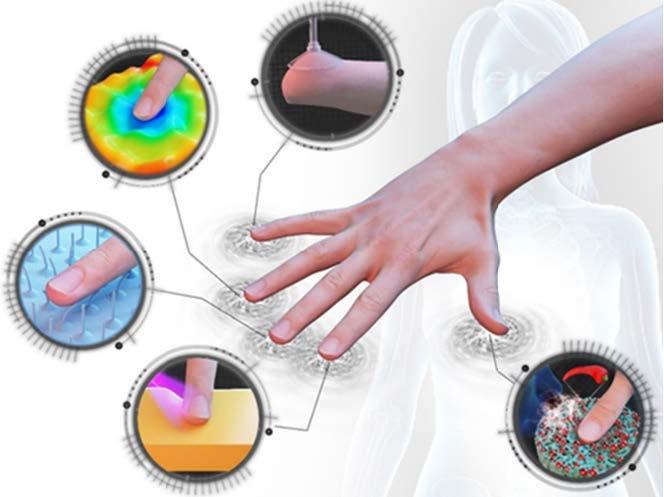
Schematic representation shows the haptic functions; credit: D. Liu