At ºÚÁÏÍø, student support is a daily practice carried out by hundreds of dedicated professionals across departments, campuses and programs – from the advisors who help first-generation students navigate financial aid deadlines to the staff members who welcome veterans transitioning to campus life.
That commitment recently earned national recognition when NASPA – Student Affairs Administrators in Higher Education , along with the top two grand prizes. The CommUNITY Lab earned Gold in the Equity, Inclusion, Social Justice and related category and the overall Grand Gold, while the Summer Advantage Program earned Gold in the Enrollment Management, Financial Aid, First-year, Other-year, Orientation and related category and the overall Grand Silver.
NASPA's Excellence Awards recognize programs that are transforming higher education through outstanding services and effective administration. For Kent State to claim both the Grand Gold and Grand Silver in the same year places the university among a select group of institutions leading the way in student support nationally.
The awards reflect an institutional culture that touches students at every stage of their academic journey – from the moment they arrive on campus to the day they walk across the commencement stage and beyond.
Building Belonging From Day One
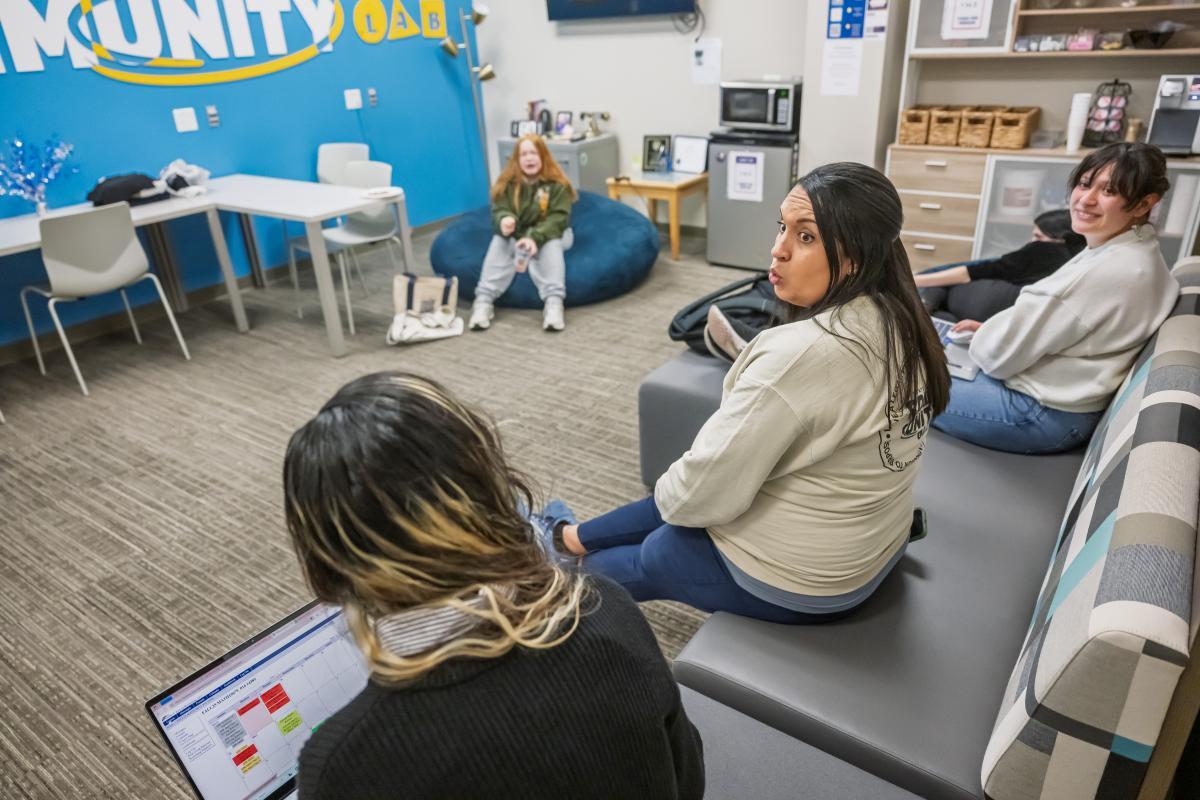
For many students, particularly those who are the first in their families to attend college, the early weeks on campus can be overwhelming. The CommUNITY Lab, housed in University College, was built to meet that challenge head-on.
Brianna Benson, assistant director of Kent State's Student Success Programs, helps oversee the CommUNITY Lab, where students in various scholarship programs – many of them first-generation – find a responsive living-learning community designed to support them throughout their entire Kent State experience.
"We're with them from start to finish," Benson said. "We're with you the whole four years."
The CommUNITY Lab works with students attending Kent State through scholarship programs, including the LeBron James Family Foundation, the District of Columbia College Access Program, Say Yes to Cleveland, Upward Bound and the Elliot Scholars, a newer program that aids first-generation students who require financial support.
Because many of these students are blazing a trail no one in their family has walked before, they often need guidance navigating registration, financial aid, housing and the many deadlines that come with college life.
"Everything is new to our students, and they don't always know the best place to start," Benson said. "We're trying to create some empowerment."
The CommUNITY Lab is one piece of a broader first-generation support system at Kent State that has drawn national attention. The university holds the highest status – Network Champion – in the FirstGen Forward network, making it a national model for first-generation student success.
A Head Start on Success
The Summer Advantage Program was born from a simple but important observation: second-year students were struggling.
"In your first year, you've got your Flashes 101 class and a lot of intentional communication," said Melanie Jones, director of Student Success Programs in University College, who has led the program since 2018. "We noticed that when students got to their second year, some of that dropped off."
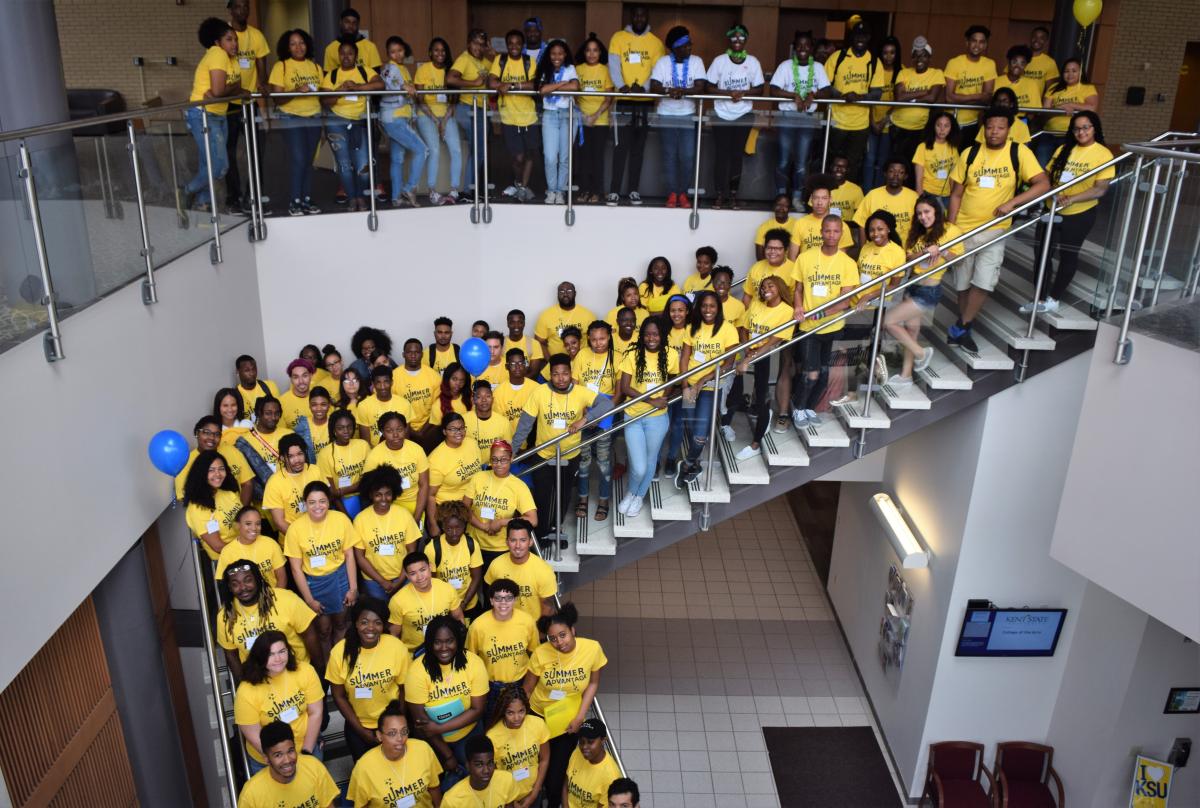
Over the past nine years, the program has grown into a support system for students who need an academic boost, financial literacy growth or a stronger sense of belonging. Students are invited to apply based on academic progress and financial need, and participants take a three-credit summer course that applies to their degree while completing workshops on wellness, financial literacy, academic success and career development.
The program now offers around 250 spots each summer, with about 200 students ultimately participating. More than 1,500 students have taken part over the last nine years, with flexible options – including online courses and virtual workshops – that allow students to participate even if they are home for the summer, working or studying abroad.
For Yeshe Mulugeta, a senior criminology and justice studies major from Washington, D.C., the program became a lifeline.
"Adjusting from high school to college is really hard," Mulugeta said. "My high school didn't prep me enough for the workload, and I didn't do well in one of my science credits."
A staff member told Mulugeta about the Summer Advantage Program after her first year at Kent State, and she hasn't missed a summer since.
Jones said the recognition from NASPA reflects both the program's impact and its potential.
"The program genuinely works for students in a way that helps them have transformational experiences," she said. "We're able to demonstrate how other institutions could mirror this opportunity."
A Culture of Support Across Campus
The NASPA awards spotlight two programs, but they represent a much larger ecosystem of care at Kent State.
The Academic Success Center provides free peer tutoring, academic coaching, skills workshops and peer-assisted study sessions available to students across all levels, including virtual options that extend services to students at Regional Campuses as far as East Liverpool.
"We really focus on helping students build skills and confidence," said Chris Tankersley, director of the center. "There's a common misconception that only struggling students use tutoring, but we're here for everyone."
The TRIO Programs, funded continuously by the federal government since the late 1970s, support 300 students every year with tutoring, success advocacy and professional development. The Center for Adult and Veteran Services supports military-connected and parenting students, contributing to Kent State's Military Friendly School designation – now in its 17th consecutive year, with the Kent Campus holding Gold ranking status.
The CARES Center, which opened in 2021 to address student mental health and basic needs, is another example of Kent State's commitment to holistic student care. The center was initially overseen by Joshua Perkins, Ph.D., who now serves as associate vice president and dean of students. Perkins, whose career in higher education spans 20 years, brought his background in clinical counseling and student advocacy to the center's founding and saw it as an opportunity to bring critical support services together under one roof.
"If we could avoid them being in those spaces, that would be ideal," Perkins said of students facing difficult situations. "But if anybody's going to be there, I want to be there helping them."
Eboni Pringle, Ph.D., senior vice president for the Division of Student Life, has described the division's work as a blueprint for promoting student development, personal growth, career success and a sense of belonging.
"We want to build on that," Pringle said of the university's tradition of student support, pointing to the CARES Center and the division's strategic focus on helping students feel welcome and supported during a time of rapid cultural change.
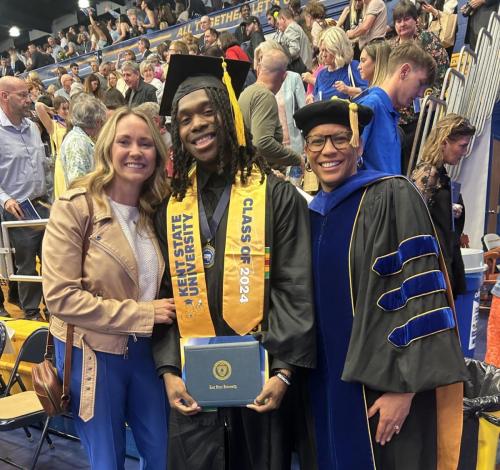
For students like Brooklyn Jones, a first-generation college student and Elliot Scholarship recipient from Fort Mill, South Carolina, that support makes all the difference. Jones, who has dyslexia, arrived at Kent State with a passion for creative writing and a determination to help others with learning disabilities feel confident.
"Growing up, I struggled in school due to my dyslexia," she said. "This caused me to feel unworthy, alone and like I had no chance of even going to college."
At Kent State, Jones found the encouragement she needed to thrive – and to pay it forward.
Kent State's two NASPA Gold awards – and both Grand prizes – confirm what students, faculty and staff experience every day: that when a university commits to meeting students where they are, the results extend far beyond any single program or prize.